Warm Minimalism: The Design Movement Redefining Contemporary Living
Warm minimalism emerges as the antidote to sterile modernism, blending clean lines with natural textures and earthy palettes for spaces that feel both refined and inviting.
The era of cold, stark minimalism is drawing to a close. In its place rises a more nuanced approach to pared-down living: warm minimalism. This design philosophy maintains the clean lines and uncluttered aesthetic that defined its predecessor while introducing natural materials, earthy color palettes, and tactile elements that transform spaces from sterile showcases into sanctuaries of sophisticated comfort.
Unlike traditional minimalism's reliance on white walls and chrome fixtures, warm minimalism embraces the inherent beauty of imperfection. It's a movement that recognizes the human need for connection to natural elements, even within the most refined interior spaces. The result is an aesthetic that feels both intentional and effortless, curated yet lived-in.
Material Foundations: Texture Over Ornamentation
The material palette of warm minimalism centers on organic textures that invite touch and contemplation. Natural stone takes precedence—think honed travertine countertops, limestone accent walls, and raw marble surfaces that celebrate rather than hide their natural variations. These materials serve as architectural anchors, their irregular patterns providing visual interest without compromising the clean aesthetic.
Reclaimed wood introduces warmth through both color and history. Whether expressed as wide-plank flooring with subtle grain variations or floating shelves that showcase the material's natural edge, wood elements ground spaces in authenticity. The key lies in restraint: a single statement beam or carefully placed accent wall rather than overwhelming wood treatments.
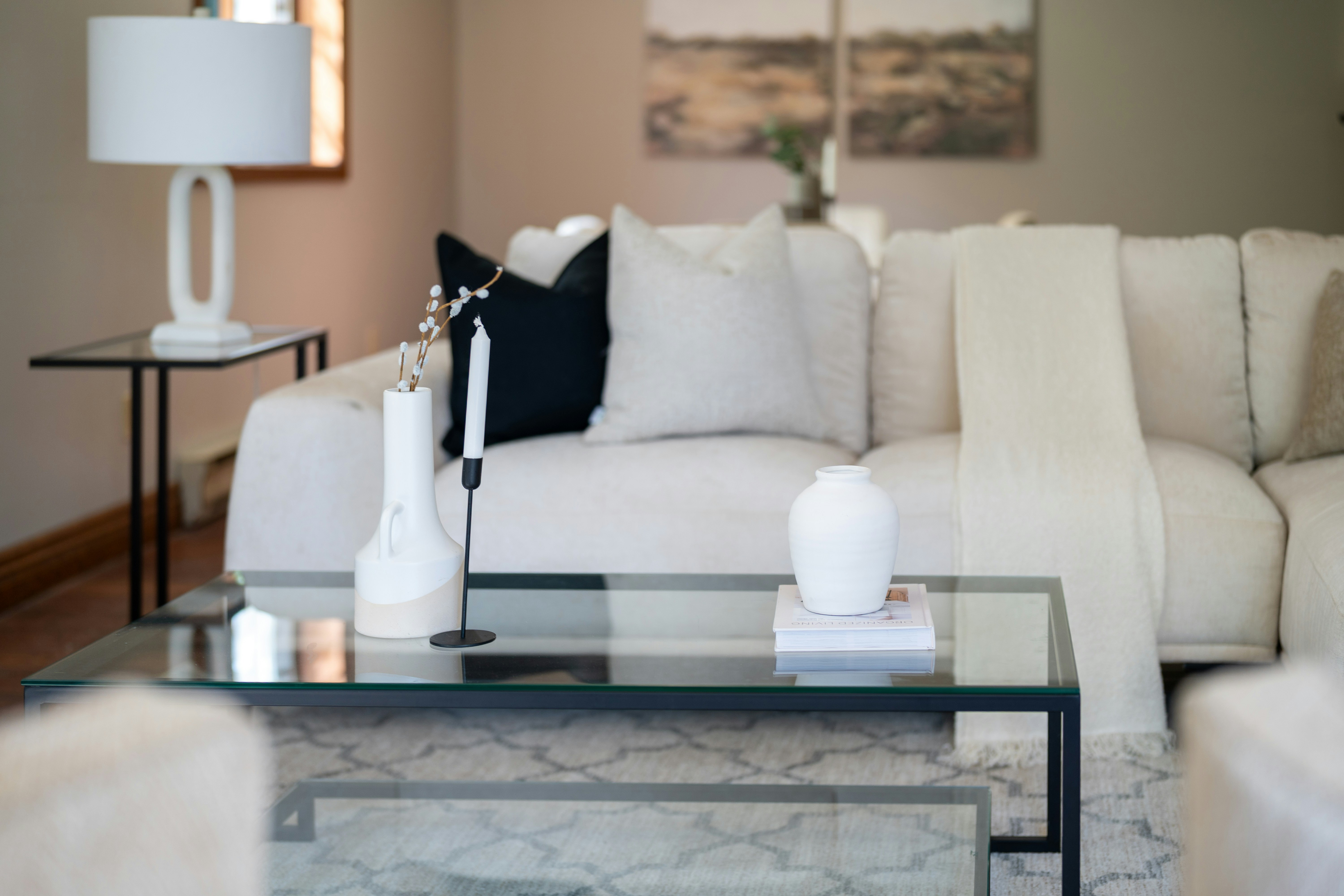
Textiles play a crucial supporting role, with linen upholstery and wool throws adding softness to geometric furniture forms. Bouclé fabrics bring subtle texture without pattern, while chunky knit pillows introduce organic shapes that contrast beautifully with sleek sofas and angular coffee tables. The goal is to create layers of comfort that enhance rather than compete with the overall composition.
The Sophisticated Earth Palette
Color in warm minimalism moves beyond the traditional white-and-gray foundation to embrace what designers term the "sophisticated earth palette." Warm whites with cream undertones replace stark alternatives, creating backgrounds that feel welcoming rather than clinical. These serve as canvases for deeper, more complex accent colors.
Terracotta emerges as the signature hue of this movement—not the bright orange of Southwestern design, but muted, dusty variations that evoke Mediterranean pottery and desert landscapes. These tones appear in everything from ceramic vases to accent walls, always in measured doses that maintain visual balance.
Sage green provides organic contrast, whether through potted plants, textiles, or painted cabinetry. This color connects interior spaces to the natural world while maintaining the sophisticated restraint that defines the aesthetic. Complementary earth tones—warm grays, mushroom browns, and soft ochres—round out the palette, creating depth without visual chaos.
The strategic use of matte black accents prevents the overall scheme from becoming too soft. Powder-coated light fixtures, slim-profile hardware, and minimalist picture frames provide necessary contrast while maintaining the understated elegance that characterizes the style.
Spatial Philosophy: Breathing Room with Purpose
Warm minimalism's approach to space planning prioritizes what designers call "intentional emptiness"—areas left deliberately sparse to enhance the impact of carefully chosen elements. This philosophy extends beyond mere decluttering to embrace the Japanese concept of ma, or meaningful negative space.
Furniture selection follows the "investment piece" principle: fewer items of exceptional quality rather than multiple mediocre alternatives. A single oversized sofa in neutral bouclé might anchor a living room, paired with a live-edge coffee table and perhaps one statement floor lamp. Each piece serves multiple functions while maintaining its individual integrity.
Integrated storage solutions maintain the uncluttered aesthetic while acknowledging practical needs. Custom millwork disappears into walls, creating seamless surfaces that hide everyday necessities without sacrificing accessibility. Open shelving, when used, displays a careful curation of objects—perhaps handmade ceramics, bound books, and sculptural elements that reinforce the natural material palette.
The result is an environment that feels both aspirational and achievable, sophisticated yet comfortable—a space that invites both contemplation and daily living with equal grace.